# Matters: Smarter Case Organization & Context
## Keeping Your Work Organized in Matters
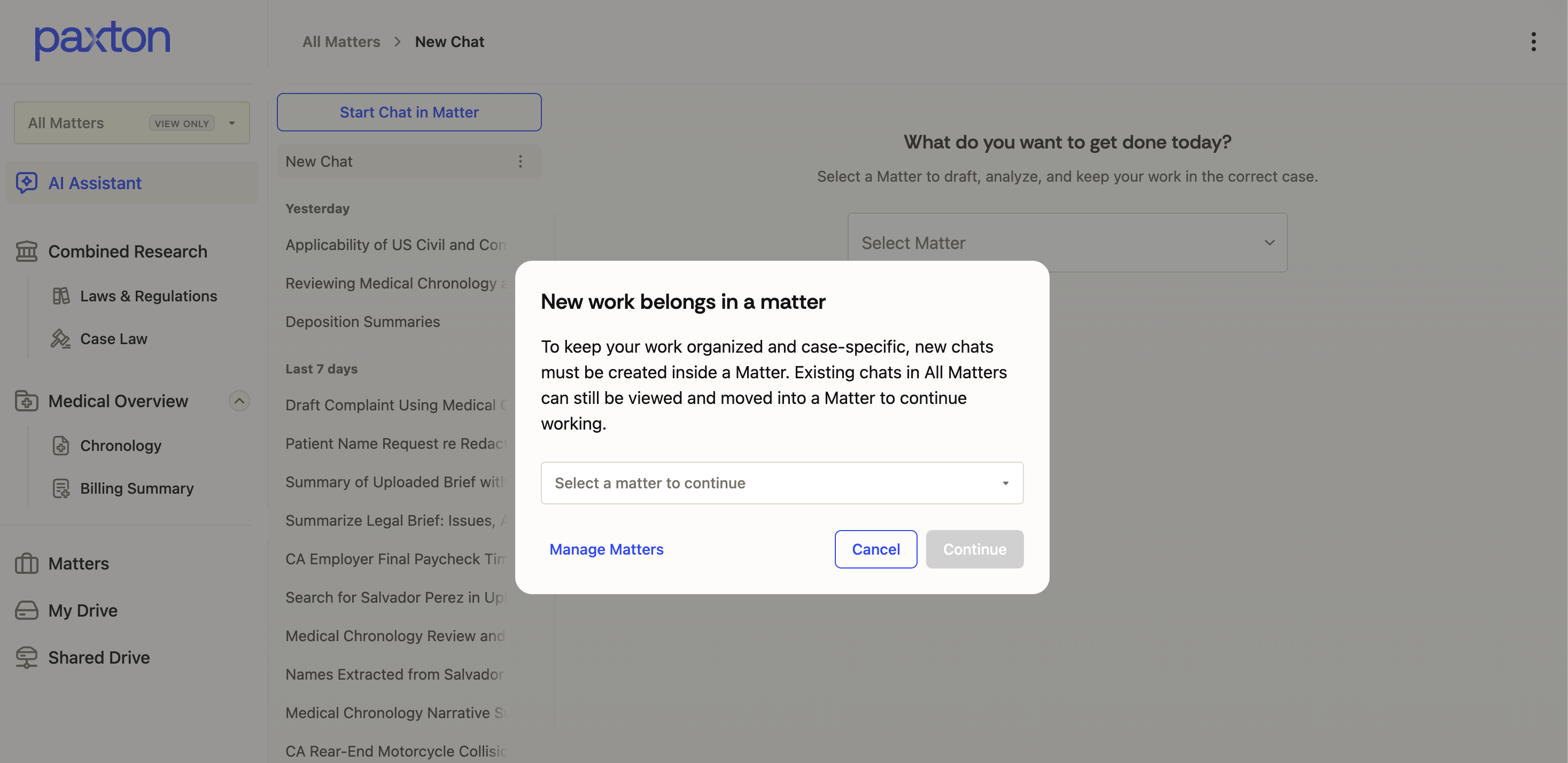
* **All new work starts inside a Matter**\
To keep chats, drafts, and documents tied to the correct case, new conversations must be created within a Matter.
* **Existing chats are still accessible**\
Anything previously created in “All Matters” can still be viewed, and you can move it into a Matter anytime to continue working.
* **Select or create a Matter to proceed**\
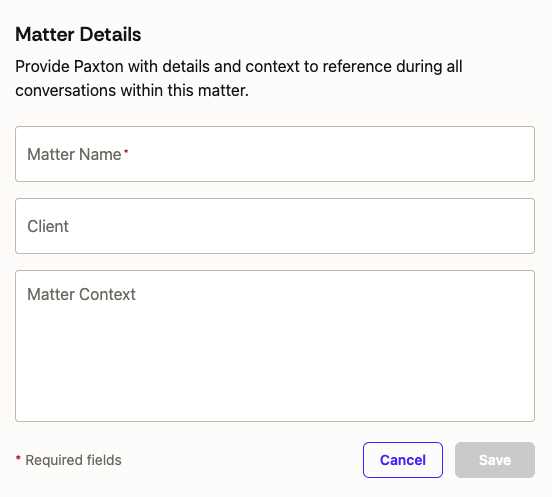
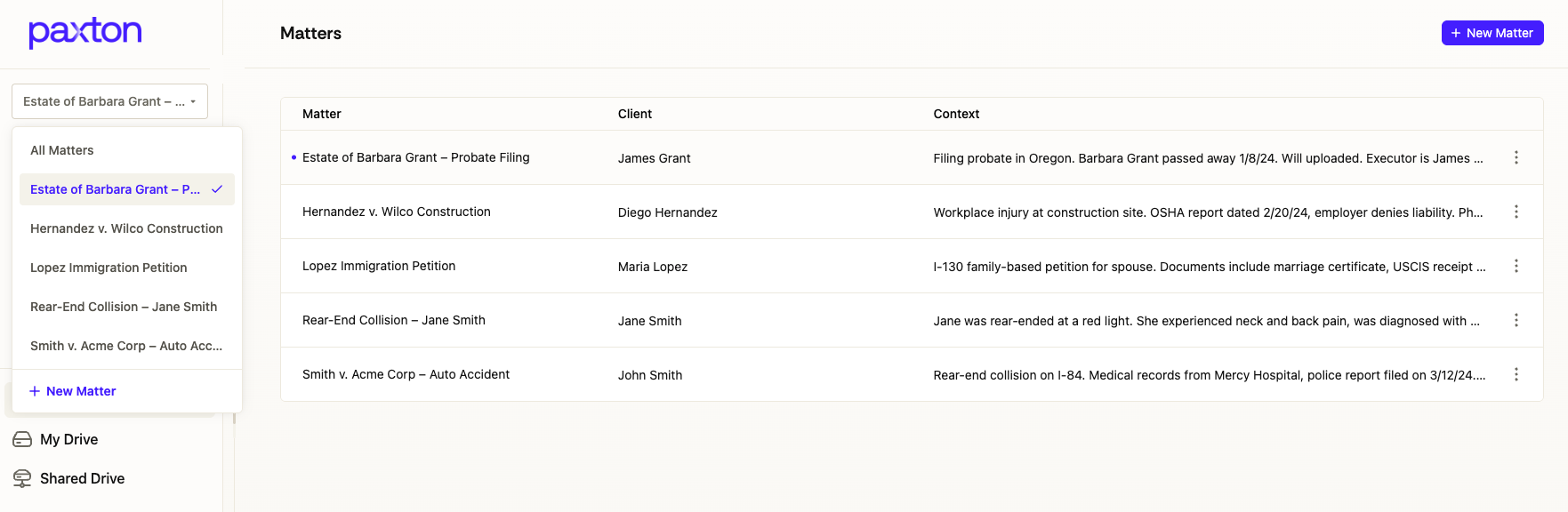
Choose an existing Matter from the dropdown, or click **Manage Matters** to create a new one before continuing.
\
Each time you start or continue a conversation within a Matter, the Paxton will reference the Matter Context you've provided so your responses are tailored to that specific case. Files will still need to be selected and attached in each new conversation when working with Matters.
### Moving an Existing Conversation into a Matter (Step by Step)
If you started a chat outside of a Matter, you can move it into the right case at any time.
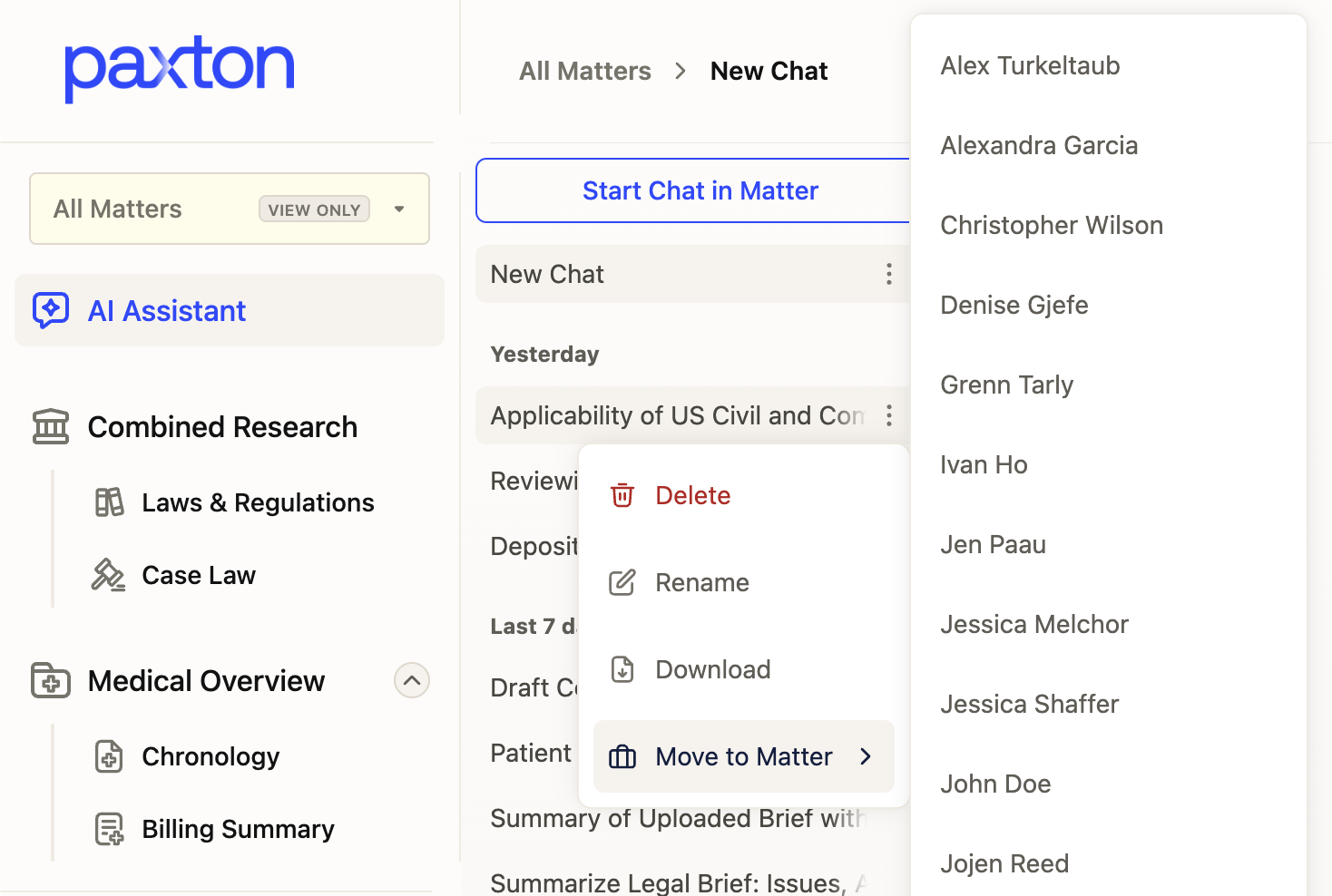
1. **Open the conversation menu**: Hover over the chat you want to move and click the **three dots** next to its title.
2. **Select “Move to Matter”**: A menu will appear with your available Matters.
3. **Choose the right Matter**: Pick an existing Matter or create a new one directly from this menu.
4.
```
```
Once moved, the conversation will live inside that Matter along with all related context and chats. From then on, Paxton will use both the Matter Context and the imported conversation history to provide smarter, case-specific responses.
### Why Use Matters?
Without a Matter, every conversation with Paxton starts from scratch. But inside a Matter:
* **Context sticks**: Paxton will reference the Matter Context for each conversation within that matter.
* **Case separation**: Conversations across different Matters don’t bleed into each other. This keeps your work organized, private, and conflict-free.